On Monday (10-6-2025), Microsoft’s Amanda Langowski, a key figure in the Windows Insider Program, announced a significant change to the Windows setup process: “We are removing known mechanisms for creating a local account in the Windows Setup experience (OOBE).” The official justification is that these workarounds, while popular for bypassing the mandatory Microsoft Account (MSA) login, could also “inadvertently skip critical setup screens, potentially causing users to exit OOBE with a device that is not fully configured for use.”
This claim warrants a deep investigation. Is Microsoft’s move a genuine effort to protect users from an incomplete setup, or is it a carefully worded justification for pushing users deeper into its cloud ecosystem? This article will dissect the technical realities behind the claim to verify its accuracy.
## The “Known Mechanisms” Being Removed
To understand the change, we must first identify the “mechanisms” Microsoft is targeting. For years, technically savvy users have employed several well-documented workarounds during the Out-of-Box Experience (OOBE) to create an offline, local account instead of signing in with or creating a Microsoft Account.
The most common methods include:
Disconnecting from the Internet: The simplest method. If the setup process cannot detect an active internet connection, it historically would fall back to offering local account creation as the only option. In recent versions of Windows 11, this has been made more difficult, with the setup sometimes halting until a connection is established.
Using a Blocked Email: Entering a known-to-be-blocked email address (like no@thankyou.com or a@a.com) and a random password would cause the MSA login to fail, after which the system would offer to create a local account instead.
The OOBE\BYPASSNRO Command: This is the most famous power-user method. During the network connection screen, a user could press Shift+F10 to open a Command Prompt and type the command OOBE\BYPASSNRO. This would restart the setup process with a new option, “I don’t have internet,” which directly leads to the local account creation screen.
Microsoft’s statement confirms it is actively working to close these loopholes in future builds of Windows, starting with the Canary and Dev channels of the Insider program.
## The Core Claim: Are “Critical Setup Screens” Skipped?
The central pillar of Microsoft’s argument is that bypassing the MSA login leads to a “not fully configured” device because “critical setup screens” are skipped. Let’s analyze the OOBE workflow to test this assertion.
The typical Windows OOBE sequence includes:
Region and Keyboard Layout
Network Connection
Microsoft Account Sign-in / Creation
Create a PIN
Privacy Settings (Location, Find My Device, Diagnostic Data, etc.)
Customize Your Experience (Gaming, Schoolwork, etc.)
OneDrive Backup Offer
Microsoft 365 / PC Game Pass Offer
When a user employs a workaround like BYPASSNRO, they are primarily skipping the Microsoft Account Sign-in screen. After the bypass, the OOBE does not terminate. Instead, it reroutes the user to an alternative flow:
Create a user name for a local account.
Create a password for that account.
Set up three security questions.
Following this, the user is presented with the exact same Privacy Settings screens as a user who signed in with an MSA. They still configure location services, diagnostic data sharing, and other core OS settings.
So, what “critical” screens are actually missed? The primary omissions are those directly tied to the Microsoft cloud ecosystem: OneDrive setup, automatic sync of settings via the MSA, and activation of services like Find My Device which rely on being linked to an online account.
From a purely operational standpoint, a device set up with a local account is 100% functional. It can connect to the internet, browse the web, install applications from any source, and perform all core Windows tasks. To label it “not fully configured for use” is debatable. It is more accurately described as “not fully configured for Microsoft’s cloud-integrated services.” The term “critical” is subjective and appears to be defined from Microsoft’s strategic perspective, not from the user’s need for a functional operating system.
## The Unspoken Motivation: The Push for MSAs
If the technical justification is weak, then the real motivation likely lies elsewhere. Forcing users to sign in with a Microsoft Account serves several key strategic goals for the company:
Ecosystem Lock-in: An MSA is the glue that binds a user to Microsoft’s ecosystem. It links Windows to OneDrive, Microsoft 365, the Microsoft Store, and Xbox Game Pass. This increases user dependency and the lifetime value of that customer.
Data and Telemetry: While diagnostic data can be collected from local accounts, an MSA provides a richer, user-identified dataset. This data is invaluable for personalizing experiences, targeting advertisements, and refining products.
Service Revenue: Microsoft’s business model is increasingly reliant on services and subscriptions. Tightly integrating OneDrive, PC Game Pass, and Microsoft 365 directly into the setup process dramatically increases the odds of user adoption and future revenue.
Simplified Security (The Strongest Pro-Microsoft Argument): To be fair, MSAs offer tangible security benefits. They enable two-factor authentication (2FA), seamless password recovery, and automatic cloud backup for BitLocker recovery keys, features that are more difficult or impossible to implement on a purely local account.
## Conclusion: A Verdict on the Claim
Microsoft’s claim that it is removing local account workarounds to prevent users from ending up with an “incompletely configured” device is technically misleading.
While the bypasses do skip screens, these screens are almost exclusively related to integrating the device with Microsoft’s cloud services, not to the core functionality of the operating system itself. A user who creates a local account is left with a fully operational and configurable computer.
The assertion appears to be a public relations justification for a strategic business decision. The primary driver for this change is not user protection but the long-standing corporate goal of increasing Microsoft Account adoption. By framing the removal of user choice as a measure to ensure a “fully configured” experience, Microsoft is attempting to soften a move that fundamentally reduces user autonomy in favor of ecosystem integration. The user’s definition of a “complete setup” and Microsoft’s are, it seems, fundamentally different.
Microsoft Copilot represents a significant strategic initiative by Microsoft, embedding generative artificial intelligence across its vast ecosystem of products and services. Positioned as an AI-powered assistant, Copilot aims to enhance productivity, creativity, and collaboration for users ranging from individuals to large enterprises. Leveraging advanced Large Language Models (LLMs) like GPT-4 and integrating deeply with Microsoft Graph data, Copilot offers capabilities such as content generation, summarization, data analysis, task automation, and code completion within familiar applications like Windows, Microsoft 365, Edge, and GitHub.
The primary benefits center on substantial productivity and efficiency gains, achieved by automating routine tasks and accelerating complex processes like data analysis and content creation. Copilot can streamline communication through features like meeting summarization and email drafting, potentially democratizing skills previously requiring specialized expertise.
However, these benefits are counterbalanced by significant challenges. The cost of Copilot, particularly the enterprise-focused Microsoft 365 version, presents a considerable investment. Concerns regarding the accuracy and reliability of AI-generated content necessitate constant user vigilance and fact-checking to mitigate risks associated with errors or “hallucinations.” Furthermore, the deep integration with organizational data, while powerful, introduces critical privacy and security risks, primarily around data exposure due to inadequate access controls and oversharing within the M365 environment. Effectively managing these risks requires mature data governance practices. Potential over-reliance on the technology raises concerns about skill atrophy and the diminishment of critical thinking.
Public perception is mixed, acknowledging the productivity potential while voicing concerns about cost, privacy, and reliability. Copilot’s effectiveness is largely confined to the Microsoft ecosystem, limiting its utility for organizations with diverse toolchains. Compared to competitors like Google Gemini and ChatGPT, Copilot’s key differentiator is its unparalleled integration within Microsoft products, though this also contributes to its ecosystem dependency.
Ultimately, the decision to adopt Copilot requires a careful balancing act. Organizations must weigh the potential productivity enhancements against the substantial costs, the inherent risks of AI inaccuracies, and the critical need for robust data governance and security measures. Successful adoption hinges not just on deploying the technology, but on fostering a culture of responsible use, continuous oversight, and realistic expectations about its capabilities as an assistant, not an autonomous replacement for human judgment.
1. Introduction: Understanding Microsoft Copilot
1.1. Defining Copilot: An AI Assistant Across the Microsoft Ecosystem
Microsoft Copilot emerges as a central pillar in Microsoft’s artificial intelligence strategy, defined as an AI-powered productivity tool 1 or a sophisticated “digital assistant”.2 Its stated purpose is to leverage machine learning and natural language processing to optimize productivity, inspire creativity, and enhance collaboration within the extensive Microsoft ecosystem.2 Functionally, it acts as an intelligent assistant, simplifying tasks by offering context-aware suggestions, generating content, providing valuable insights, and automating repetitive processes across various Microsoft platforms.2
This AI assistant represents Microsoft’s primary replacement for its discontinued virtual assistant, Cortana, marking a significant evolution towards integrating advanced generative AI capabilities directly into user workflows.4 The development of Copilot builds upon earlier concepts like Bing Chat and Bing Chat Enterprise, consolidating these efforts under a unified brand.2
Microsoft consistently frames Copilot not as an autonomous agent but as an assistant working alongside the user. The analogy frequently employed is that Copilot acts as the “copilot,” while the human user remains the “pilot,” maintaining ultimate control over the tasks and decisions.5 This framing emphasizes augmentation – enhancing human capabilities rather than replacing them. Users are encouraged to direct, review, and refine the AI’s output, deciding what to keep, modify, or discard.6 This deliberate positioning appears designed to address potential user apprehension regarding AI’s role in the workplace, particularly fears of job displacement or loss of control. By emphasizing partnership and user agency, Microsoft aims to make the technology seem less like a replacement and more like a powerful tool to be wielded, potentially smoothing adoption pathways, especially within enterprise environments concerned about ethical implications and workforce acceptance.5
1.2. Core Capabilities and Underlying Technology
Microsoft Copilot encompasses a wide array of capabilities designed to assist users in diverse tasks. Core functions include summarizing large volumes of information, such as documents or email threads 6, and drafting various forms of content, from emails and reports to presentations and even code.2 It can answer user queries, often grounding its responses in the user’s specific work context and data when integrated with Microsoft 365.9 For developers, GitHub Copilot provides specialized code generation and completion features.2 Within applications like Excel, it assists with data analysis, formula suggestion, and visualization.5 Task automation is another key capability, handling repetitive processes to free up user time.2
The technological foundation of Copilot relies heavily on Large Language Models (LLMs), with specific mention of OpenAI’s GPT-4 series.4 These models are fine-tuned using both supervised and reinforcement learning techniques to enhance their performance for specific tasks.4 Microsoft refers to its implementation as the “Copilot System,” a sophisticated engine that orchestrates the power of these LLMs with two other critical components: the Microsoft 365 apps and the user’s business data accessible via the Microsoft Graph.6
The integration with Microsoft Graph is a cornerstone of Copilot for Microsoft 365’s functionality.1 Microsoft Graph provides Copilot with real-time access to a user’s organizational context, including emails, calendar information, chat history, documents, and contacts.6 This allows Copilot to generate responses that are not only intelligent but also highly personalized and relevant to the user’s specific work environment and ongoing tasks.6 To improve the relevance and accuracy of information retrieval from this vast dataset, Copilot utilizes Semantic Indexing for Microsoft 365, which employs advanced lexical and semantic understanding to provide more contextually precise results while respecting security and privacy boundaries.9
This deep integration with Microsoft Graph represents both Copilot’s most significant advantage and its most critical vulnerability for enterprise users. While competitors may offer powerful LLMs, they typically lack native access to the rich, interconnected organizational context that the Graph provides.15 This allows Copilot to deliver uniquely personalized and context-aware assistance, grounding its outputs in the user’s actual work data.6 However, this very capability simultaneously amplifies the risks associated with poor data governance within an organization. Copilot operates based on the user’s existing permissions; it can access and potentially surface any data the user is authorized to see.16 If an organization suffers from widespread “oversharing” – where users have access to more data than necessary for their roles – Copilot can inadvertently aggregate and expose sensitive information through simple prompts, turning latent permission issues into active data leakage risks.16 Therefore, the feature that underpins Copilot’s enterprise value proposition inherently creates a substantial security and compliance challenge that organizations must proactively address before widespread deployment.
1.3. Overview of Copilot Versions
Microsoft offers Copilot through several distinct versions and integrations, each tailored to different user needs and contexts:
Microsoft Copilot (Free Tier): This is the baseline, consumer-focused version, often referred to as the successor to Bing Chat or Bing Chat Enterprise.2 It is accessible via Bing.com, the Microsoft Edge browser, and directly within the Windows operating system.2 It provides general web-based chat capabilities, leveraging LLMs like GPT-4 for answering queries, generating text, and performing tasks based on web data.4 It includes features like image generation through Microsoft Designer and supports a limited number of plugins.4 This version is available free of charge.21
Copilot Pro: A paid subscription service ($20 per user per month) targeted at individuals, power users, and potentially small businesses seeking enhanced capabilities.4 It offers priority access to newer and faster models like GPT-4 Turbo, especially during peak usage times.21 Subscribers benefit from improved performance, enhanced image creation capabilities (Image Creator from Designer), and integration into the free web versions of Microsoft 365 apps (Word, Excel, PowerPoint, Outlook).4 It also provides access to upcoming features like the Copilot GPT Builder for creating custom chatbots.21 However, some user reports suggest its integration with desktop apps might be less comprehensive than the full M365 Copilot version.23
Copilot for Microsoft 365: This is the flagship enterprise offering, priced at $30 per user per month as an add-on to qualifying Microsoft 365 licenses (such as E3, E5, Business Standard, or Business Premium).1 It integrates deeply within the suite of Microsoft 365 desktop applications (Word, Excel, PowerPoint, Outlook, Teams, etc.).6 Crucially, it leverages the user’s organizational data via Microsoft Graph to provide highly contextualized assistance, operating under Microsoft’s commercial data protection commitments.2 This version includes Microsoft 365 Chat (formerly Business Chat), a dedicated chat experience that works across the user’s entire M365 data landscape.6 Microsoft initially imposed a 300-seat minimum purchase requirement, but this was removed in early 2024, making it accessible to smaller businesses.21
GitHub Copilot: A specialized AI tool designed specifically for software developers, often described as an “AI pair programmer”.11 It focuses on suggesting and completing code snippets, generating code from natural language comments, explaining code blocks, and assisting with debugging directly within popular Integrated Development Environments (IDEs) like Visual Studio Code, Visual Studio, and JetBrains IDEs.10 It operates on a separate subscription model ($10/month for Individual, $19/month per user for Business) and is distinct from the other Copilot offerings.11
Copilot Chat (Microsoft 365 Copilot Chat): A secure, AI-powered chat experience primarily grounded in web data (using models like GPT-4o) but offering enterprise data protection for users signed in with a Microsoft Entra ID (formerly Azure AD).12 It can be accessed via copilot.microsoft.com, the M365 App, Teams, and Edge.12 Notably, it can be used without requiring a full Copilot for Microsoft 365 license and includes options for pay-as-you-go “agents”.12 It is distinct from the M365 Chat included with Copilot for M365, as the latter is also grounded in the user’s internal Microsoft Graph data.12
Copilot Studio: A low-code platform enabling organizations to customize Copilot for Microsoft 365 or build entirely new, standalone conversational AI applications tailored to specific business needs, such as customer service or HR automation.25
Other Domain-Specific Copilots: Microsoft is also embedding Copilot capabilities into other business applications like Dynamics 365 (for sales, service, etc.), Microsoft Fabric (for data analytics and Power BI), and the Power Platform (Power Apps, Power Automate).2
The sheer number of products bearing the “Copilot” name, each with distinct capabilities, data access levels, security guarantees, and pricing structures, creates a complex landscape for potential users and organizations.2 For instance, the data handling policies differ significantly: Copilot for M365 processes internal Graph data with commercial data protection, while the free Copilot primarily uses web data without those enterprise guarantees, and Copilot Chat offers a hybrid model.2 Licensing prerequisites and costs also vary widely.1 This fragmentation and branding complexity can lead to confusion, making it challenging for organizations to determine the appropriate tool for their needs, manage licenses effectively, train users consistently, and apply coherent security and compliance policies across the different Copilot experiences they might encounter.22
2. Integration Deep Dive: Copilot Across Microsoft Products
Microsoft’s strategy involves embedding Copilot functionality deeply within its existing product suite, aiming to make AI assistance a seamless part of the user experience across various platforms.
2.1. Copilot in Windows
Copilot is integrated directly into the Windows operating system, functioning as an OS-level intelligent assistant.14 It is typically accessible via an icon on the taskbar or, on newer hardware designated as “AI PCs,” through a dedicated Copilot key on the keyboard, which replaces the traditional menu key.4 If Copilot is disabled or unavailable in a user’s region, this key defaults to launching Windows Search.4
The primary functions of Copilot in Windows include providing quick answers and information sourced from the web, assisting with creative tasks, and helping users manage their PC environment.5 Users can interact with it using natural language, including voice commands.4 Specific capabilities include adjusting PC settings (like switching between dark and light modes 27), organizing application windows, and initiating creative projects.14 Furthermore, it can interact with the content being viewed in the Microsoft Edge browser, offering summaries or insights related to the current webpage.4 This OS-level integration is provided free of charge to Windows users.9
Embedding Copilot directly into the dominant desktop operating system provides Microsoft with a substantial competitive edge. This integration makes Copilot features readily accessible to billions of Windows users with minimal friction, unlike competing AI assistants that typically require opening a separate application or browser tab.4 The ability to control OS-level functions adds a layer of utility beyond simple chat capabilities.5 The introduction of dedicated hardware keys further solidifies its presence.4 This deep integration strategy could significantly influence user habits, potentially reducing the inclination to seek out or rely on third-party AI tools for everyday tasks and thereby strengthening Microsoft’s overall ecosystem dominance.
2.2. Copilot for Microsoft 365: Enhancing Productivity Apps
The Copilot for Microsoft 365 offering represents the core enterprise integration, designed to work alongside users directly within the familiar Microsoft 365 applications.1 This requires the paid Copilot for Microsoft 365 license.1 Its key differentiator is the ability to leverage user-specific context derived from Microsoft Graph data (emails, chats, documents, calendar) to provide relevant assistance.6
Integration manifests in various ways across the suite:
Word: Copilot assists in the writing process by generating initial drafts (“first drafts”) based on simple prompts or existing documents, helping users overcome the “blank page” challenge.5 It can summarize lengthy documents, rewrite sections of text, suggest different tones (e.g., professional, informal), and incorporate information from other files within the user’s M365 environment.2
Excel: Copilot aids in data analysis and exploration. Users can ask natural language questions about their data, and Copilot can help generate formulas, create charts and pivot tables for visualization, identify trends, and filter data based on criteria.2
PowerPoint: The integration aims to streamline presentation creation. Copilot can generate draft presentations based on prompts or by converting existing Word documents.5 It can also summarize presentations, suggest layout changes for specific slides, and help refine text content.1 However, some analyses suggest the quality of automatically generated slides may still require significant manual refinement for professional use.15
Outlook: Copilot focuses on improving email management and communication efficiency. It can summarize long email threads to quickly bring users up to speed, draft replies based on context or information from other M365 sources, and help prioritize important messages, aiming to reduce time spent managing the inbox.2 Some user feedback indicates that its utility in email drafting might still be evolving.30
Teams: Copilot offers significant enhancements for collaboration and meetings. During meetings, it can provide real-time summaries of key discussion points, identify who said what, note areas of agreement or disagreement, and suggest action items.5 It can also summarize chat conversations (up to 30 days prior) and answer questions based on meeting transcripts or chat history.6 The meeting summarization feature, in particular, has been highlighted by some users as highly accurate and valuable for saving time.30 Its ability to analyze content like internal PDFs shared in Teams chat may depend on organizational security and retention policies.23
Microsoft 365 Chat (formerly Business Chat): This component acts as a distinct chat interface, often accessible within Teams or the main Microsoft 365 application.6 Unlike the app-specific integrations, M365 Chat works across the user’s entire accessible Microsoft 365 data landscape – including calendar, emails, chats, documents, meetings, and contacts – allowing users to ask broader questions, synthesize information from multiple sources, and perform tasks that span different applications.3
While Copilot demonstrably automates tasks and offers incremental productivity improvements 3, its deeper potential within Microsoft 365 lies in transforming workflows by seamlessly connecting information and actions across different applications. Examples include turning a Word document into a PowerPoint presentation outline 5 or extracting action items from a Teams meeting to populate tasks in Outlook or Planner. This cross-application capability, powered by the underlying Graph integration, represents a vision beyond simple in-app assistance.3 However, current user experiences and analyses suggest that the realization of this transformative potential is still developing.15 While certain features like meeting summaries are proving highly impactful 30, others, such as automated presentation generation, may still produce results requiring considerable human refinement.15 This indicates that while the foundation for workflow transformation is being laid, the practical reality for many users may currently be closer to significant, yet still incremental, efficiency gains in specific areas, with substantial human oversight and judgment remaining essential.6
2.3. Copilot in Edge
Microsoft has integrated Copilot functionality directly into its Edge web browser, typically accessible via a dedicated icon in the browser’s sidebar.14 This integration provides users with AI-powered features contextualized to their browsing activity.
Key functionalities include interacting with a chat interface (similar to the free Copilot/Bing Chat experience) for general web queries, generating text, and receiving AI assistance without leaving the browser.14 A significant feature is its ability to interact with the content of the currently viewed webpage, allowing users to request summaries, ask questions about the page’s content, or generate related text.4 It appears designed to work in conjunction with Copilot in Windows, potentially sharing context or capabilities.4 For organizations, the behavior and availability of Copilot in Edge can be managed by administrators through specific Edge configuration profiles within the Microsoft 365 admin center.20
Integrating Copilot directly into the Edge browser serves multiple strategic purposes for Microsoft. It offers users convenient, in-context AI assistance while browsing, enhancing the browser’s value proposition.14 Features like webpage summarization incentivize using Edge over competing browsers lacking native integration.4 This increased usage of Edge potentially provides Microsoft with a richer stream of data regarding user web interactions. While Microsoft assures that Copilot for M365 does not use tenant data for training base models 2, the broader Copilot ecosystem, including interactions within Edge (particularly for users not signed in with an Entra ID or through anonymized aggregation), could potentially leverage this data to refine the underlying AI models. This virtuous cycle – better features driving Edge usage, which in turn provides data to improve AI features – helps solidify user engagement within the Microsoft ecosystem.
2.4. GitHub Copilot: AI Pair Programmer
GitHub Copilot is a distinct offering within the Copilot family, specifically tailored for software developers.2 It functions as an AI-powered pair programmer, integrated directly into popular code editors and IDEs.11 Its primary capability is providing real-time code suggestions and completions as a developer types, significantly speeding up the coding process.10
Beyond simple completion, GitHub Copilot can understand the context of the code being written, suggest entire blocks of code based on natural language comments or function signatures, offer alternative implementations, and provide customizable templates for common coding patterns (like setting up APIs or database connections).10 It also includes features for generating code summaries to aid understanding, assisting with debugging, and even helping formulate commit messages.10 A key component is GitHub Copilot Chat, which allows developers to ask coding-related questions, get explanations, and troubleshoot issues directly within their development environment.11 Microsoft positions GitHub Copilot as a tool to increase developer velocity, reduce time spent on repetitive coding tasks, and improve overall developer satisfaction.11
It is crucial to understand that GitHub Copilot is a separate product with its own subscription tiers (Individual, Business, Enterprise) and pricing structure, distinct from Copilot Pro or Copilot for Microsoft 365.11 While both leverage powerful AI models, their focus and integration points differ significantly. M365 Copilot targets general business productivity within Office applications, whereas GitHub Copilot is laser-focused on the specific workflows and technical requirements of software development within IDEs.25
The clear separation in branding, functionality, and pricing between GitHub Copilot and the more general M365 Copilot offerings underscores the current landscape of AI assistants. While generalized AI tools are becoming increasingly capable across a broad range of tasks, highly complex and specialized domains like software development appear to benefit significantly from AI tools specifically trained and tailored for that domain’s intricacies.11 GitHub Copilot’s success and distinct market positioning 11 suggest that the market will likely continue to support both broad, general-purpose AI assistants and specialized, domain-specific “copilots” designed to provide deep expertise in particular fields. This points towards a future where users might interact with a general assistant for everyday tasks alongside one or more specialized AIs for their professional discipline.
2.5. Other Integrations (Dynamics 365, Power Platform, Fabric)
Microsoft’s Copilot strategy extends beyond the core Windows, Office, and developer experiences, permeating its broader portfolio of enterprise cloud services:
Copilot for Dynamics 365: Provides AI assistance tailored to various business functions managed within the Dynamics 365 suite, including sales, customer support, supply chain management, finance, and marketing operations.2
Copilot in Power Platform: Integrates AI into Microsoft’s low-code/no-code tools. In Power Apps, it allows creators to build applications, including data structures, by describing their requirements using natural language through a conversational interface.5 In Power Automate, it simplifies the creation of automation workflows; users can describe the desired process, and Copilot assists in setting up triggers, actions, connections, and parameters.5
Copilot in Microsoft Fabric: Brings AI capabilities to Microsoft’s unified data and analytics platform. Within Fabric, particularly in Power BI, Copilot enables users to analyze data, create reports, generate DAX (Data Analysis Expressions) calculations, produce narrative summaries of data, and ask questions about their datasets using conversational language.2 It aims to significantly reduce the time required to build insightful report pages.14
These integrations demonstrate a systematic effort by Microsoft to weave AI capabilities into nearly every facet of its enterprise cloud offerings. The goal appears to be creating an interconnected, AI-enhanced ecosystem where Copilot serves as an intelligent layer across diverse business processes, from individual productivity and development to CRM, ERP, low-code application building, and business intelligence.2 This pervasive strategy aims to position AI not as a standalone feature but as an integral component of modern business operations conducted through Microsoft services.
To clarify the complex landscape of Copilot integrations, the following table provides a summary:
Table 2.1: Copilot Integration Matrix
Copilot Version/Integration
Platform/App
Key Functionality Summary
Primary Data Source(s)
Commercial Data Protection (Entra ID Sign-in)
Microsoft Copilot (Free)
Windows OS, Edge Browser, Bing.com
Web search, Q&A, content generation, image creation, basic OS/browser assistance
Web Data, User Prompts
No (Consumer Service)
Copilot Pro
Windows, Edge, Bing, M365 Web Apps
Priority access to models, enhanced image creation, custom GPTs, M365 web app integration
Code completion/suggestion, code generation from prompts, chat, debugging assistance
Public Code Repositories, User Code Context, Prompts
N/A (Separate Service/Terms)
Copilot in Windows
Windows OS
OS settings control, window management, web search integration, Edge page interaction
Web Data, OS Context, User Prompts
Conditional (Depends on sign-in/version)
Copilot in Edge
Edge Browser
Webpage summarization/interaction, web search, content generation
Web Data, Webpage Context, User Prompts
Conditional (Depends on sign-in/version)
Copilot for Dynamics 365
Dynamics 365 Modules (Sales, Service, etc.)
CRM/ERP task assistance, data summarization, communication drafting
Dynamics 365 Data, Microsoft Graph, User Prompts
Yes (Assumed, follows M365 pattern)
Copilot in Power Platform
Power Apps, Power Automate
App/automation creation via natural language, flow refinement
User Descriptions/Prompts, Platform Context
Yes (Assumed, follows M365 pattern)
Copilot in Microsoft Fabric
Microsoft Fabric / Power BI
Data analysis, report generation, DAX creation, data Q&A
Fabric/Power BI Data, User Prompts
Yes (Assumed, follows M365 pattern)
Copilot Studio
Standalone Platform
Custom Copilot creation and customization for M365
Configured Data Sources
Dependent on Configuration
Note: “Commercial Data Protection” typically implies that user prompts and organizational data are not saved long-term, not accessible by Microsoft personnel, and not used to train the underlying foundation AI models.
3. Evaluating the Benefits: The Upside of Using Copilot
Microsoft Copilot is positioned primarily as a tool to enhance user capabilities and streamline work processes. Several key benefits are consistently highlighted.
3.1. Productivity and Efficiency Gains
A core promise of Copilot is a significant boost in workplace productivity and efficiency.2 This is achieved primarily through the automation of routine and time-consuming tasks. Examples include summarizing lengthy documents or email chains, drafting initial versions of reports or presentations, managing email inboxes, scheduling meetings, and performing data entry or analysis tasks that previously required manual effort.2 By handling this “busy work,” Copilot aims to save users valuable time.6
Furthermore, Copilot accelerates processes like data analysis in Excel by generating insights or visualizations quickly 5, and speeds up content creation across various applications.5 For developers using GitHub Copilot, the tool significantly accelerates the coding process through intelligent code completion and generation.3 The provision of quick answers and contextual assistance also reduces the time spent searching for information or figuring out complex tasks.3 The cumulative effect of these efficiencies is intended to reduce overall employee workload and potentially decrease stress levels 2, allowing individuals and teams to redirect their focus towards more strategic, complex, and higher-value activities that require human creativity and critical thinking.3 Early adopters have reported feeling a tangible improvement in their productivity.33
3.2. Enhancing Creativity and Content Generation
Copilot is also designed to act as a creative partner, helping users generate ideas and content more effectively.2 One of its key functions is to help users overcome the initial hurdle of starting a new document or presentation – the “blank slate” problem – by generating a first draft based on a simple prompt or related materials.6 This provides a starting point that users can then edit and refine, saving significant time in the initial writing, sourcing, and editing phases.6
Beyond initial drafts, Copilot can suggest different writing tones (e.g., professional, casual, persuasive) 5, help brainstorm ideas 2, rewrite or expand upon existing text, and even generate images based on textual descriptions using integrated tools like Microsoft Designer.2 By offering different conversational modes, such as a ‘creative’ mode, Copilot can adapt its output style to suit tasks requiring more imaginative or unconventional thinking.29 Microsoft explicitly aims for Copilot to “unleash creativity” by handling some of the more mechanical aspects of content creation, allowing users to focus on the core message and ideas.3
3.3. Streamlining Collaboration and Communication
In team-based environments, Copilot offers features intended to improve collaboration and communication workflows.2 Within Microsoft Teams, its ability to provide real-time summaries of meetings, including key discussion points, decisions made, and assigned action items, is a significant benefit.5 This helps ensure that all participants, including those who joined late or could not attend, are aligned on outcomes and next steps.6 Similarly, summarizing long chat threads helps team members quickly catch up on conversations.6
Copilot also assists in crafting clearer and more effective communications. It can help draft emails or messages, potentially drawing information from other relevant documents or conversations within the Microsoft 365 environment.5 By facilitating the quick retrieval and synthesis of relevant information from across an organization’s data (via M365 Chat), it aids knowledge sharing and helps ensure that team members are working with consistent and up-to-date information, fostering more informed decision-making.3
3.4. Data Analysis and Insights Simplified
Copilot aims to make data analysis more accessible to a broader range of users, not just data specialists.13 Within tools like Excel, users can interact with their data using natural language queries.5 For instance, a user could ask Copilot to “show sales trends for the last quarter” or “identify the top-performing products.” Copilot can then assist in filtering data, generating relevant formulas, creating charts or other visualizations, and highlighting key trends or insights within the dataset.2 This capability extends beyond spreadsheets; M365 Chat allows users to query and analyze information across their various business data sources (documents, emails, etc.) to uncover connections and insights.3 Copilot in Microsoft Fabric provides similar natural language interaction for more complex business intelligence scenarios.2
The collective impact of these benefits points towards a potential democratization of certain professional skills. Tasks that traditionally required significant time investment, specific technical expertise (like advanced spreadsheet analysis or programming), design sensibility (for presentations), or meticulous effort (like taking detailed meeting minutes) are made significantly easier and faster with Copilot’s assistance.5 This lowers the barrier to entry for performing such tasks effectively 13, aligning with Microsoft’s stated goal to help users “uplevel skills”.3 Consequently, the value proposition may shift away from basic proficiency in these areas towards higher-level skills such as effective prompt engineering, critical evaluation of AI-generated output, and strategic application of AI insights.
4. Assessing the Drawbacks and Limitations
Despite the potential benefits, the adoption and use of Microsoft Copilot are accompanied by several significant drawbacks, limitations, and risks that users and organizations must carefully consider.
4.1. Accuracy, Reliability, and the Risk of “Hallucinations”
A fundamental challenge with current generative AI technology, including the LLMs powering Copilot, is the issue of accuracy and reliability.7 Copilot, like other AI systems, is prone to generating incorrect or nonsensical information, often referred to as “hallucinations”.16 These outputs can appear plausible but be factually wrong. It may also misinterpret prompts, miss crucial details when summarizing information, or produce outputs with subtle errors.7 The accuracy of its output is inherently dependent on the quality and scope of the data it accesses and the capabilities of the underlying LLM.13
This unreliability necessitates constant vigilance from users. It is crucial that users critically review and fact-check any content generated by Copilot before accepting or disseminating it.7 Blindly trusting Copilot’s output can lead to significant mistakes, flawed decision-making based on incorrect data, or the propagation of misinformation within an organization.8 Furthermore, the quality and utility of Copilot’s output can be inconsistent across different features and applications. While some capabilities like meeting summaries might be highly effective 30, others, such as presentation generation, have been described as producing lackluster results requiring substantial rework.15
4.2. Cost Considerations and Licensing Complexity
The financial investment required for Copilot, particularly for business use, is substantial. Copilot for Microsoft 365 carries a price tag of $30 per user per month, which translates to $360 per user annually.21 Importantly, this cost is an add-on to the prerequisite Microsoft 365 licenses (like Business Standard/Premium or E3/E5), significantly increasing the total software expenditure per user.1 Copilot Pro for individuals costs $20 per user per month ($240 annually) 21, and GitHub Copilot requires its own separate subscription fees.11
This pricing structure can be a significant barrier, especially for small and medium-sized businesses (SMBs) or individual users operating on tighter budgets.7 Organizations must undertake a careful cost-benefit analysis to determine if the anticipated productivity gains and time savings justify the considerable recurring expense.21 The complexity is further compounded by the licensing prerequisites, requiring organizations to ensure they have the correct base M365 plans before they can even purchase the Copilot add-on.1
4.3. Potential for Over-reliance and Skill Atrophy
Widespread use of powerful AI assistants like Copilot introduces concerns about users becoming overly dependent on the technology.8 As Copilot automates tasks and simplifies complex processes, there is a risk that users may gradually lose proficiency in the underlying manual skills or neglect the development of critical thinking and problem-solving abilities.31
This over-reliance can be particularly problematic when combined with the accuracy issues mentioned earlier. Users, especially those under time pressure or lacking domain expertise, might be tempted to accept AI-generated content without the necessary scrutiny.8 This behavior undermines the “pilot in control” principle emphasized by Microsoft 6 and increases the likelihood of errors going unnoticed.32 There is also a risk of misapplying the tool, using it as a substitute for genuine expertise in areas like legal document review or complex analysis, where nuanced human judgment is indispensable.8 Managing this tendency towards over-reliance requires ongoing user education and reinforcement of the need for critical evaluation.
4.4. Limitations Outside the Microsoft Ecosystem
Copilot’s greatest strength – its deep integration within the Microsoft ecosystem – is also a source of limitation.2 While it excels at working with data and applications within Microsoft 365, Windows, Edge, and GitHub, its capabilities are significantly restricted when interacting with non-Microsoft tools and platforms.24
This lack of interoperability reduces flexibility for organizations that utilize a diverse, multi-vendor software environment.24 Companies or teams relying heavily on applications from Google, Salesforce, Adobe, or other providers may find Copilot less useful, as it cannot seamlessly access or integrate with data and workflows residing outside the Microsoft sphere. Consequently, its value proposition is strongest for organizations already heavily invested in and standardized on Microsoft’s product suite.36
4.5. Other Concerns
Several additional challenges and concerns accompany the use of Copilot:
Learning Curve: While designed with usability in mind 24, mastering Copilot’s full potential, particularly effective prompt engineering and leveraging advanced features, requires a learning investment from users.34
Potential for Bias: The underlying LLMs, such as GPT-4, are trained on vast datasets that may contain societal biases. This means Copilot can sometimes generate outputs that reflect these biases or include stereotyped or offensive language, requiring careful review and potential mitigation.17
Intellectual Property Risks: Questions arise regarding the originality of AI-generated content and the potential for inadvertently infringing on existing intellectual property.29 While Microsoft offers some legal protection through its Copilot Copyright Commitment, organizations must remain cautious, particularly when using generated content for commercial purposes.29 Ethical debates also surround the ownership of AI-created output.7
Brand Consistency: AI-generated communications or marketing materials may not perfectly align with an organization’s established brand voice, tone, or messaging standards without careful prompting and review.29
Internet Dependency: Copilot generally requires an active internet connection to function, which can be a limitation for users working in offline environments or locations with unreliable connectivity.36
Development Stage and Bugs: As a relatively new and rapidly evolving technology, users may encounter bugs, performance issues, or limitations in current features. The product is subject to ongoing development and changes, which can impact user experience.7
These various drawbacks highlight a central tension in Copilot’s value proposition. While it promises substantial productivity benefits and time savings 2, realizing these gains requires organizations to actively manage a new set of challenges and overheads. Justifying the high cost 21, implementing processes for accuracy verification 7, establishing robust security and privacy governance 16, training users to avoid over-reliance and use the tool responsibly 8, ensuring brand alignment 29, and navigating ethical considerations 7 all demand significant organizational effort and resources. The true net benefit of Copilot is therefore not simply the time saved minus the subscription cost; it is the time saved minus the cost and minus the substantial investment required for ongoing oversight, risk mitigation, and responsible management. Organizations unprepared for this commitment may find the promised productivity gains difficult to achieve or even offset by the new burdens introduced.
Table 4.1: Summary of Microsoft Copilot Pros and Cons
Area
Pros
Cons
Productivity
Significant time savings via automation of routine tasks (summaries, drafts) 2; Accelerates content creation & coding 6
Potential for over-reliance leading to skill atrophy 8; Requires oversight & management effort (Paradox) 7
Cost
Potential for high ROI if productivity gains are realized 24
High subscription cost ($30/user/mo for M365, $20 for Pro) plus prerequisites 21; Can be prohibitive for SMBs 31
Accuracy
Can provide relevant & useful information/content when functioning correctly 30
Prone to errors, “hallucinations,” and inaccuracies 7; Requires constant user fact-checking & validation 8
Integration
Deep integration within Microsoft ecosystem (M365, Windows, Edge, GitHub) 2; Context-aware assistance using Graph data 6
Limited functionality outside the Microsoft ecosystem 24; Reliance on Microsoft platform (potential lock-in) 36
Security & Privacy
Inherits existing M365 security policies 6; Commercial Data Protection for M365/Entra ID users 2
Significant risk of data exposure via oversharing if governance is weak 16; Prompt injection vulnerabilities 17
Usability
Natural language interaction 2; Aims for consistent experience 6; Can democratize complex tasks 3
Potential learning curve for effective use/prompting 34; UI can feel cluttered due to feature richness 15
Effectiveness depends on team adoption and consistent use
Other
Continuous improvement & investment by Microsoft 7
Internet dependency 36; Potential for bias in output 17; Ongoing development may mean bugs/limitations 7
5. Navigating Privacy and Security Concerns
The integration of AI like Copilot, especially versions that interact with sensitive organizational data, inevitably raises significant privacy and security questions. Understanding how Copilot collects and processes data, Microsoft’s stated policies, and the documented risks is crucial for responsible adoption.
5.1. Data Collection and Processing: What Copilot Uses
The data Copilot utilizes varies depending on the specific version and context:
Copilot for Microsoft 365: This version accesses a rich set of data primarily from within the user’s Microsoft 365 tenant.6 This includes the content of documents, emails, calendar entries, Teams chats and meetings, contacts, and other business data stored in Microsoft Graph.1 It also processes the prompts entered by the user to generate responses.6 Critically, Copilot’s access to this data is governed by the user’s existing permissions; it can only “see” and process information that the user is already authorized to access.6
Free Copilot / Web Interactions: When using the free version of Copilot (in Bing, Edge, or Windows without an Entra ID sign-in), or when M365 Copilot explicitly queries the public web via Bing, the data processed primarily includes the user’s prompts and potentially the context of the webpage being viewed.4 These interactions rely more on external web data than internal organizational data.
General Data Types: Across versions, the system processes user prompts and the AI-generated responses. For troubleshooting and feedback purposes, diagnostic logs may be collected, which can include prompts, responses, relevant content samples, and technical log files.16 Telemetry data regarding usage and performance is also collected.16
The extent of data access, particularly for Copilot for M365, underscores the importance of understanding data boundaries and user permissions within an organization.7
5.2. Microsoft’s Data Handling Policies and Enterprise Protections
Microsoft has established specific policies and technical measures aimed at addressing enterprise concerns about data privacy and security when using Copilot, particularly the M365 version:
Commercial Data Protection: For users interacting with Copilot services (including M365 Copilot and Copilot Chat) while signed in with a work or school account (Microsoft Entra ID), Microsoft provides “commercial data protection”.2 Key commitments under this protection include:
Chat data (prompts and responses) is not saved by Microsoft.2
Microsoft personnel do not have “eyes-on” access to the interaction data.2
The user’s prompts and organizational data are not used to train the underlying foundation LLMs that power Copilot for other customers.2
All data processing occurs within the geographic boundaries defined by the customer’s Microsoft 365 tenant.6
Security Inheritance: Copilot is designed to automatically inherit the existing security, compliance, and privacy settings configured for the organization’s Microsoft 365 tenant.2 This includes respecting user permissions, data sensitivity labels, compliance boundaries, and multi-factor authentication requirements.6
Data Isolation and Residency: Microsoft employs logical isolation to prevent data from leaking between tenants or user groups within a tenant.2 Data encryption is applied, and options for data residency allow organizations to control where their data is processed and stored.2
Responsible AI (RAI): Microsoft states its commitment to developing and deploying Copilot in accordance with its Responsible AI principles, which cover fairness, reliability, safety, privacy, security, inclusiveness, transparency, and accountability.12 However, external assessments, such as some Data Privacy Impact Analyses (DPIAs), have raised questions about the practical implementation and transparency of these principles, particularly concerning telemetry data and the potential for AI hallucinations.16
External Web Queries: A critical nuance arises when Copilot for M365 needs to access information from the public internet via Bing search. Microsoft states that in these cases, the user’s prompt is de-identified (stripped of user and tenant identifiers) before being sent to the public Bing service.35 However, for these web interactions, Microsoft operates as an independent data controller for the Bing service, potentially falling outside the stricter data processor commitments defined in the enterprise agreement for M365 services.35 This distinction raises concerns about data handling transparency and potential exposure when queries leave the protected tenant boundary.
While Microsoft provides assurances through its policies and the Copilot Trust Center 11, organizations must still conduct their own due diligence and risk assessments.
5.3. Documented Security Risks
Despite Microsoft’s safeguards, deploying Copilot introduces several significant security risks that organizations must actively manage:
Data Exposure via Oversharing (The Primary Risk): This is widely considered the most critical security concern associated with Copilot for M365.16 Because Copilot operates with the user’s existing permissions, it can easily access and aggregate sensitive information if those permissions are overly broad. Many organizations suffer from poor “permissions hygiene,” where numerous users have access to confidential data (like financial records, intellectual property, HR information, PII) they don’t strictly need.19 Copilot can instantly surface and combine this data in response to seemingly innocuous prompts, turning latent access issues into active data leaks.16 Research indicates a substantial percentage of business-critical data within organizations is often overshared internally.19 Furthermore, AI-generated content summarizing sensitive documents might not automatically inherit the sensitivity labels of the source files, potentially leading to unprotected sensitive data proliferation.19
Prompt Injection and Jailbreaking: Attackers can craft malicious prompts designed to trick Copilot into performing unintended actions.16 These prompts might be hidden within documents or emails that Copilot processes. Successful attacks could potentially bypass safety filters, exfiltrate data (using techniques like embedding data in seemingly harmless hyperlinks or using invisible characters – “ASCII smuggling”), or manipulate Copilot to execute commands or socially engineer the user.18 While Microsoft implements defenses like Prompt Shields, the evolving nature of these attacks means risks remain.18
Insecure Output Handling: If Copilot generates content based on poorly secured or sensitive source data (due to oversharing), the output itself can become a vector for data leakage if shared inappropriately.19
External Data Risks: When Copilot relies on external web searches via Bing, there’s a risk of incorporating inaccurate, biased, outdated, or even malicious information from the web into internal business workflows, potentially leading to flawed decisions or security incidents.35
Insider Threats: Malicious employees could potentially exploit Copilot’s ability to rapidly search and aggregate data across the tenant for corporate espionage, fraud, or other harmful activities.17
Software Vulnerabilities: Like any complex software, Copilot and its integrations can have vulnerabilities. For example, a Server-Side Request Forgery (SSRF) vulnerability was discovered in Copilot Studio (CVE-2024-38206) that could potentially allow attackers to leak information about internal cloud services.19 Vulnerabilities in underlying Microsoft 365 services could also potentially impact Copilot’s security due to the tight integration.18
5.4. Compliance and Governance Considerations
Addressing the privacy and security risks of Copilot necessitates robust compliance and governance frameworks:
Data Governance is Paramount: Successful and safe deployment of Copilot, especially M365 Copilot, is fundamentally dependent on strong data governance practices.16 Before broad rollout, organizations must invest in:
Data Classification: Identifying and labeling sensitive information.
Implementing Least Privilege: Ensuring users only have access to the data strictly necessary for their roles.
Remediating Oversharing: Auditing and correcting excessive permissions across SharePoint sites, Teams, OneDrive, and other repositories.19
Establishing Clear Sharing Guidelines: Defining policies for internal and external data sharing.18
Regular Access Reviews: Periodically verifying user permissions.18
Regulatory Compliance: Organizations must ensure their use of Copilot complies with relevant data protection regulations like GDPR, HIPAA, CCPA, etc. Specific concerns have been raised regarding the ability to exercise data subject access rights for certain diagnostic data collected by Microsoft.16 The compliance status for specific use cases, such as processing protected health information (PHI) under HIPAA, requires careful verification.17 The sensitivity surrounding potential data leaks led the US Congress to initially ban its staff from using Copilot, highlighting the compliance hurdles in regulated environments.18
Monitoring and Auditing: Implementing mechanisms to monitor Copilot usage and user behavior is important for detecting potential misuse or security incidents.18 Microsoft provides access to Copilot diagnostics logs, which administrators can use for troubleshooting and potentially for oversight, although the scope and utility for proactive monitoring need evaluation.20
Ethical Guidelines and Responsible Use Policies: Organizations need to develop and communicate clear internal policies governing the acceptable and ethical use of Copilot. These should address requirements for fact-checking outputs, avoiding the introduction of bias, appropriate use cases (and prohibited ones), and managing intellectual property considerations.7
The significant data exposure risks associated with Copilot for M365, stemming from its ability to access all permitted user data 16, create a situation where deploying the tool effectively acts as a high-stakes audit of an organization’s existing data security posture. The potential for Copilot to instantly reveal the consequences of poor data governance (like oversharing 19) means that organizations cannot responsibly deploy it at scale without first addressing these underlying weaknesses. This necessity turns Copilot into an unexpected catalyst; the desire to leverage its productivity benefits becomes a powerful motivator for organizations to finally invest in maturing their data governance, access control, and information protection practices – transforming a significant risk into an opportunity for foundational security improvement if managed proactively.16
6. Public Perception and User Experience
The reception of Microsoft Copilot among users and the broader market has been multifaceted, reflecting both enthusiasm for its potential and apprehension about its costs and risks.
6.1. Market Reception and User Sentiment Analysis
Overall sentiment towards Copilot appears mixed, though early adopters, particularly those focused on productivity gains, often express positive feedback.30 Some users report being “thrilled” with the capabilities, especially in enterprise settings.30 Platform ratings, while sometimes based on limited reviews, show positive scores on sites like Product Hunt.15
Specific points of positive feedback frequently center on the tangible productivity boosts experienced.33 Features that automate tedious or time-consuming tasks, such as generating meeting summaries and action items in Teams, are often cited as particularly valuable and accurate.30 The general theme of saving time and reducing workload resonates positively with many users.2
However, significant criticisms and concerns temper this enthusiasm. The high cost of the subscription plans, especially Copilot for M365, is a major point of contention, frequently cited as potentially prohibitive for smaller organizations or individuals.7 Concerns about the accuracy and reliability of the AI-generated content are widespread, emphasizing the need for constant fact-checking and the risk of relying on flawed information.7 Privacy remains a persistent concern, with users expressing unease about the extent of data access required by Copilot, particularly the M365 version, and how that data is handled, despite Microsoft’s assurances.7
Other criticisms include the potential for over-reliance on the technology leading to skill degradation 8, the uneven quality or perceived utility across different integrated features (with some, like PowerPoint generation, seen as less mature than others) 15, and the complexity arising from the numerous different Copilot versions and their varying capabilities.23 The fact that it is a relatively new and evolving product also leads to expectations of encountering bugs or “growing pains”.7 Security vulnerabilities and the potential for data leaks have also led to high-profile concerns, such as the temporary ban by the US Congress.18 Some comparative reviews also note that Copilot’s user interface can feel more cluttered than competitors’.15
6.2. User Interface and Experience
Microsoft aims to provide an intuitive and consistent user experience for Copilot across the various applications it integrates with, using a shared design language for prompts, refinements, and commands.6 The Copilot Chat interface, for instance, is specifically designed for work and education contexts and includes visual cues, like a green shield icon, to indicate when enterprise data protection is active.12
Interaction with Copilot primarily occurs through natural language prompts typed or spoken by the user.2 To assist users, Copilot often provides suggested prompts or starting points.9 When generating responses, particularly in M365 contexts, it often includes citations linking back to the source documents or data used, allowing for verification.9 Users can sometimes choose between different conversational modes, such as ‘balanced,’ ‘precise,’ or ‘creative,’ to influence the style of the output, although switching modes might necessitate starting a new conversation or search.29
Despite efforts towards consistency, the user experience can vary. Some users have criticized the mobile app experience for having limited functionality compared to desktop versions.23 Comparative analyses suggest that while Copilot’s interface integrates a rich set of features reflecting its deep embedding in multiple applications, this can result in a perception of being more “cluttered” compared to the simpler, cleaner interfaces of more standalone AI chatbots like Google Gemini.15
This comparison highlights a fundamental design challenge inherent in Microsoft’s approach. Copilot’s power stems from its deep integration across a complex suite of applications.6 Exposing these context-specific capabilities naturally requires more complex UI elements within each application (e.g., different Copilot options appear in Excel versus Word). Similarly, M365 Chat needs to effectively surface information from diverse data sources.6 This necessary complexity, driven by the integration strategy, inevitably contrasts with the simplicity achievable by a standalone chatbot with a narrower focus.15 Microsoft thus faces the ongoing task of balancing the provision of powerful, deeply integrated features with the user desire for simplicity and ease of navigation – a common tension in developing feature-rich enterprise software.
7. Managing Copilot: Disabling and Uninstalling Features
The ability to manage, disable, or control Copilot functionality varies depending on the specific Copilot version and the user’s role (administrator vs. end-user).
7.1. Guidance for Administrators (M365 Copilot)
For organizations using Copilot for Microsoft 365, management is centralized within the Microsoft 365 admin center, specifically on the dedicated ‘Copilot’ page.20 Administrators have several levers of control:
License Management: The most fundamental control is assigning or unassigning Copilot for M365 licenses to users. A user without a license will not have access to the integrated features in M365 apps.20 Admins can view license usage and availability reports here.20
Scenario Management: The admin center allows control over specific Copilot “scenarios” or features. For example, administrators can choose to allow or disallow users from utilizing the Copilot image generation capability across M365.20 They can also manage settings related to Copilot diagnostics logs, enabling admins to submit feedback logs on behalf of users experiencing issues.20 Access to Copilot Chat can also be managed, for instance, by ensuring the app is pinned for users.12
Configuration Profiles: Specific integrations, like Copilot in the Edge browser, can be managed through configuration profiles set up within the admin center (e.g., via Microsoft Edge settings).20
Data Governance Controls: While not direct “disable” switches for Copilot features themselves, the most critical administrative control lies in managing the underlying data environment. By implementing robust data classification, applying sensitivity labels, enforcing least privilege access permissions, and managing sharing settings for SharePoint, Teams, and OneDrive, administrators effectively control what data Copilot can access and process for each user.16 This is the primary mechanism for limiting Copilot’s scope and mitigating data exposure risks.
7.2. Guidance for Users (Windows, Individual Apps)
End-user control over disabling Copilot features is generally more limited, especially for the integrated M365 version:
Copilot in Windows: Users or administrators can typically disable the Copilot feature in Windows. When disabled, the taskbar button or dedicated keyboard key will launch Windows Search instead of Copilot.4 The specific steps usually involve adjusting Taskbar settings in the Windows Settings app, or for organizations, potentially using Group Policy settings.
Copilot for Microsoft 365 Apps: If an administrator has assigned a Copilot for M365 license to a user, the integrated features within Word, Excel, PowerPoint, Teams, and Outlook are generally enabled by default. Individual users typically do not have an option to completely disable or uninstall the core Copilot functionality from these applications if they are licensed for it.20 User control is framed around the “pilot in control” concept – the user decides whether and how to engage with Copilot (e.g., by initiating a prompt, accepting or rejecting suggestions) rather than switching the feature off entirely.5
Copilot in Edge: Users can likely control the visibility of the Copilot sidebar icon through the Edge browser’s settings menu, allowing them to hide it if they prefer not to use it.
The overall management approach, particularly for the enterprise-focused Copilot for M365, clearly prioritizes administrative control over licensing and, crucially, the underlying data access environment.16 Rather than offering granular toggles for end-users to switch off specific Copilot buttons or features within their licensed applications, the focus is on centrally governed deployment and risk management through data governance. This reflects an enterprise software strategy where core functionality, once licensed and deployed, is generally expected to be available, with control exercised primarily through access rights and organizational policy, rather than individual user preference for disabling features. User autonomy is expressed through the choice of interaction, not the presence of the tool itself.6
8. Competitive Landscape: Copilot vs. Other AI Assistants
Microsoft Copilot operates in a rapidly evolving market populated by several other prominent AI assistants, most notably Google’s Gemini and OpenAI’s ChatGPT. Understanding Copilot’s position requires comparing its features, integration strategies, privacy approaches, and target audiences against these key competitors.
8.1. Feature Comparison (e.g., vs. Google Gemini, ChatGPT)
Core AI Quality and Capabilities: Copilot, particularly the Pro and M365 versions leveraging GPT-4 and newer models, is generally regarded as having high-quality output with good factual accuracy and responsiveness to feedback.15 Some comparisons suggest it initially outperformed Google’s Gemini in terms of consistency and accuracy.15 OpenAI’s ChatGPT, also often powered by GPT-4, remains a strong benchmark, sometimes excelling in specific tasks like language translation compared to Copilot.4 Google Gemini (which replaced Bard) is Google’s primary generative AI offering, powered by its own family of LLMs.15 All these tools offer core capabilities like text generation, summarization, question answering, and increasingly, multi-modal functions like image generation. Copilot distinguishes itself with features deeply tied to the Microsoft ecosystem, such as M365 Chat grounded in organizational data.6
Integration: This is Copilot’s most significant differentiator. Its deep embedding across the Windows OS and the entire Microsoft 365 application suite provides contextual assistance directly within user workflows.2 In contrast, Google Gemini’s integration into Google Workspace applications (Docs, Sheets, Slides, Gmail) was reported, at least initially, to be less comprehensive and functional.15 ChatGPT primarily operates as a standalone application or integrates via APIs and plugins, lacking the native, built-in experience Copilot offers within Microsoft products.
Functionality and User Experience: Copilot provides context-aware help within specific apps (e.g., analyzing data in Excel, drafting emails in Outlook).6 Gemini is noted for having a clean, uncomplicated user interface, potentially appealing to users seeking simplicity.15 Copilot’s UI, while feature-rich, has been described as potentially more cluttered due to its extensive integrations.15 ChatGPT is renowned for its strong conversational abilities and broad general knowledge base.4
Customization: Copilot offers some level of customization through different modes (creative, precise, balanced) 29 and, more significantly, through Copilot Studio for building tailored experiences.25 However, built-in customization options within the core products might be perceived as limited compared to some specialized tools or the flexibility offered by APIs from competitors.15
8.2. Differing Approaches to Integration and Privacy
Integration Strategy: Microsoft’s approach is characterized by deep, pervasive integration across its entire ecosystem, aiming to make Copilot an omnipresent assistant.6 Google’s integration of Gemini into Workspace appeared more measured or gradual initially.15 Other players often focus on standalone experiences or provide APIs for third-party integration.
Enterprise Privacy: For its enterprise offering (Copilot for M365), Microsoft heavily emphasizes its commercial data protection commitments, leveraging existing Microsoft 365 trust frameworks and policies (data processed within tenant, no training on customer data, inheriting security settings).2 This provides a level of assurance for organizations already invested in and trusting the Microsoft cloud platform. Competitors like Google and OpenAI offer their own enterprise-grade privacy and security commitments for their respective business offerings, but Copilot benefits from piggybacking on established M365 governance structures. However, the handling of Copilot’s external web queries via Bing remains a point of scrutiny regarding data control boundaries.35
8.3. Market Positioning and Target Audiences
The different Copilot versions target distinct segments:
Copilot for Microsoft 365: Unambiguously aimed at enterprise customers heavily utilizing the Microsoft 365 suite. Its value proposition is tightly linked to enhancing productivity within that specific ecosystem by leveraging unique organizational data via Microsoft Graph.21
Copilot Pro: Designed for individuals, “super users,” freelancers, and potentially very small businesses who desire more advanced AI capabilities (like priority model access and better image generation) and some level of M365 integration (primarily web apps) without the full enterprise license cost and prerequisites.4
GitHub Copilot: Serves the niche but substantial market of software developers, focusing exclusively on coding assistance within their development environments.11
Competitors: Google Gemini targets both the consumer market and Google Workspace users, positioning itself as a direct competitor across both fronts. ChatGPT has broad appeal, serving consumers, developers (via its API), and enterprises with its ChatGPT Enterprise offering. Other AI tools often focus on specific functional niches, like Canva AI for design tasks.24
Microsoft’s overarching Copilot strategy, particularly with the M365 integration, appears heavily geared towards leveraging its existing dominance in enterprise productivity software (Microsoft 365) and operating systems (Windows) to create significant AI ecosystem lock-in. By embedding Copilot so deeply and grounding its unique value proposition in organizational data accessible only through Microsoft Graph 2, Microsoft makes it challenging for competitors to match its contextual relevance directly within the user’s daily workflow. This deep integration, combined with licensing often tied to existing M365 subscriptions 1 and noted limitations outside the Microsoft ecosystem 24, strongly incentivizes existing Microsoft customers to adopt Copilot rather than seeking third-party AI solutions. This strategy effectively increases the complexity and cost of switching away from the Microsoft platform for AI capabilities, thereby reinforcing Microsoft’s competitive advantage and market share in the lucrative enterprise AI assistant space.
Table 8.1: Feature and Privacy Comparison – Copilot vs. Competitors
Feature/Aspect
Microsoft Copilot (M365/Pro/Free)
Google Gemini (Advanced/Business/Free)
OpenAI ChatGPT (Plus/Team/Enterprise)
Core AI Model(s)
GPT-4 series, GPT-4o, Microsoft Prometheus
Gemini Pro, Gemini Ultra
GPT-4 series, GPT-3.5
Key Differentiator
Deep integration with Microsoft 365/Windows; Use of Graph data (M365)
Integration with Google ecosystem; Strong search grounding
Strong conversational ability; Broad knowledge base; API availability
Microsoft Copilot represents a bold and ambitious integration of generative AI into the fabric of everyday computing and business processes. Its potential to enhance productivity, streamline workflows, and augment creativity is significant, particularly for users and organizations already embedded within the Microsoft ecosystem. However, its adoption is not without considerable challenges and risks.
9.1. Synthesizing the Analysis: Is Copilot Right for You/Your Organization?
The decision of whether to adopt Microsoft Copilot requires a nuanced assessment of its benefits against its drawbacks, tailored to specific circumstances.
Recap: Copilot offers the core value proposition of deeply integrated AI assistance across Microsoft platforms, promising substantial productivity gains.2 This is balanced against significant costs 21, inherent risks related to AI accuracy and reliability 7, critical privacy and security concerns demanding robust governance 16, and a strong dependence on the Microsoft ecosystem.24
Decision Factors: Key factors influencing the decision include:
Ecosystem Alignment: Organizations heavily invested in Microsoft 365 and Windows will derive the most value from Copilot’s deep integration.24 Those using diverse, non-Microsoft tools may find its utility limited.
Budget: The substantial subscription costs, particularly for Copilot for M365, require a clear budget allocation and expectation of return on investment.21 SMBs may find the cost prohibitive.31
Data Governance Maturity: Critically, organizations must assess their readiness to manage the data security risks. Deploying M365 Copilot without first addressing issues like data oversharing and implementing strong access controls is highly inadvisable.16
Need for Integration vs. Standalone AI: If the primary need is for AI assistance deeply embedded within daily workflows (e.g., summarizing emails in Outlook, analyzing data in Excel), Copilot is a strong contender. If standalone AI chat or specialized AI tools suffice, alternatives might be more cost-effective or suitable.15
Specific Use Cases: The choice of Copilot version (Free, Pro, M365, GitHub) depends heavily on the primary users and tasks (general consumer, power user, enterprise employee, developer).21
Recommendation Framework: Evaluating Copilot should involve calculating the potential ROI, considering not just the subscription cost but also the necessary investment in governance, training, and ongoing oversight (addressing the “Copilot Paradox” [Insight 4.5.1]). Organizations should assess their risk tolerance regarding data privacy and AI accuracy. Alignment with the organization’s broader technology strategy, particularly its reliance on the Microsoft platform, is essential. For enterprise adoption, a phased approach is recommended: start with pilot programs involving a small group of users to evaluate benefits, identify challenges, refine policies, and test data governance controls before considering a wider rollout.29
9.2. Key Considerations for Adoption and Use
For organizations choosing to adopt Copilot, particularly Copilot for M365, several practices are critical for maximizing benefits while mitigating risks:
Prioritize Data Governance: This cannot be overstated. Before deploying Copilot widely, organizations must invest in cleaning up permissions, remediating data oversharing, implementing the principle of least privilege, and classifying sensitive data accurately.16 Copilot’s safety hinges on the security of the underlying data environment.
Invest in User Training and Awareness: Users need comprehensive training not only on how to use Copilot effectively (including basic prompt engineering) but also on its limitations. This includes understanding the potential for inaccuracies and biases, the critical importance of fact-checking outputs 8, security best practices (e.g., not inputting highly sensitive data unnecessarily), and the organization’s specific usage policies.18
Develop Clear Usage Policies: Establish and communicate clear guidelines covering acceptable use cases, data handling procedures (especially regarding sensitive information), ethical considerations (bias mitigation, transparency), intellectual property management, and procedures for reporting issues or concerns.7
Implement Monitoring and Iteration: Regularly monitor Copilot usage patterns and user feedback. Utilize available tools like diagnostics logs for troubleshooting.20 Continuously review data access permissions 18 and adapt policies and training as the technology evolves and organizational understanding matures.7
Manage Expectations Realistically: Foster an understanding throughout the organization that Copilot is an assistant designed to augment human capabilities, not replace human judgment, critical thinking, or domain expertise.5 Emphasize that the user remains the “pilot” responsible for the final output.
9.3. Future Outlook for Copilot
Microsoft Copilot is not a static product but part of a rapidly evolving AI landscape. Several trends are likely to shape its future:
Continuous Improvement and Expansion: Microsoft is investing heavily in Copilot’s development.7 Users can expect ongoing improvements in model accuracy, feature enhancements, deeper integrations, and the introduction of new capabilities, potentially through programs like Copilot Labs.4
Increased Specialization: While M365 Copilot provides broad productivity assistance, the success of GitHub Copilot suggests a potential trend towards more domain-specific Copilots tailored for various professions or industries, offering deeper expertise than a general-purpose assistant.
Intensifying Platform Competition: The battle for AI assistant dominance between Microsoft, Google, OpenAI, Amazon, and others will continue to drive rapid innovation. This competition may lead to new features, potentially more competitive pricing structures, and evolving strategies around integration and platform openness.
Evolving Regulatory Landscape: The development and deployment of AI tools like Copilot will increasingly be shaped by emerging AI regulations globally. Issues related to data privacy, bias, transparency, accountability, and safety will influence feature design, deployment constraints, and organizational compliance requirements.16
In conclusion, Microsoft Copilot stands as a powerful testament to the potential of integrated AI to reshape productivity. Its deep embedding within the Microsoft ecosystem offers unparalleled convenience and contextual relevance for millions of users. However, its adoption requires a clear-eyed assessment of its costs, limitations, and, most importantly, the profound data governance and security responsibilities it imposes on organizations. Success with Copilot will belong to those who approach it not just as a technological tool to be deployed, but as a socio-technical system requiring careful management, continuous learning, and a steadfast commitment to responsible use.
A recent ransomware attack exploiting vulnerabilities in a Microsoft-signed driver 1 has once again brought Microsoft’s software patching process under scrutiny. While the tech giant regularly releases patches for its Windows operating systems and other software products, security experts and users alike are pointing to fundamental flaws that leave systems vulnerable and users frustrated.
Timeliness Concerns
One of the primary concerns is the timeliness of patches. Despite Microsoft’s efforts to address vulnerabilities promptly, the average time to fix software security flaws has risen to eight and a half months 2. This delay leaves systems exposed to known vulnerabilities, increasing the risk of successful attacks. In some cases, critical bugs have remained unpatched for several months, leaving users dangerously exposed 3. For example, a bug in 2024 caused some Windows 10 PCs to remain unpatched against actively exploited vulnerabilities for months 3.
Patch Overload
Adding to the complexity is the sheer volume of patches released by Microsoft. With hundreds of updates released in some months, IT teams often struggle to keep up with the constant stream of patches 4. This can lead to prioritization challenges, with critical security patches sometimes taking a backseat to less urgent updates.
Compatibility Issues
Furthermore, compatibility issues plague the patching process. Patches can sometimes conflict with existing software or hardware, causing system crashes, application errors, and performance degradation 4. This necessitates thorough testing before deployment, which can be time-consuming and resource-intensive, especially for organizations with diverse IT environments. For instance, the Windows 11 24H2 update has been known to cause issues with applications like AutoCAD 2022 and Citrix components 5.
User Impact
Users also experience problems stemming from Microsoft’s patching process. Updates have been known to cause a range of issues, from blue screens of death and reboot loops 6 to problems with peripherals and internet connectivity 5. Some users have reported that the latest Windows 11 update rendered their computers almost unusable due to cursor problems 7. These disruptions can lead to decreased productivity, frustration, and even data loss.
Patch Tuesday: A Double-Edged Sword
A significant aspect of Microsoft’s patching strategy is “Patch Tuesday,” a term used for the company’s monthly release of software patches and security updates 8. This predictable schedule, occurring on the second Tuesday of every month, can be both helpful and problematic. While it provides IT administrators with a predictable timeframe for deploying updates, it also creates a window of vulnerability between releases, which attackers can exploit.
The Patching Landscape
To understand the complexity of Microsoft’s patching process, it’s important to consider the different types of Windows patches. These include:
Security updates: These address weaknesses and potential threats in applications and operating systems 9.
Feature updates: These are large upgrades to the operating system that bring new functionalities and enhancements to existing features 9.
Driver updates: These update hardware drivers to improve performance, compatibility, and stability 9.
Diverse Systems, Diverse Challenges
Applying patches across diverse systems and environments adds another layer of complexity. Windows environments are rarely homogenous, with different versions of the operating system, varying hardware configurations, and a multitude of third-party applications 10. This makes it challenging to ensure that patches are compatible with all systems and do not cause unintended consequences.
Alternative Patching Approaches
In contrast to Microsoft’s centralized, scheduled approach, other software companies often employ more agile and decentralized patching strategies 11. They may use specialized teams dedicated to patching specific software or platforms, and they often rely on automated tools to streamline the process and reduce manual intervention.
Expert Analysis
Security experts have expressed concerns about the effectiveness of Microsoft’s patching process. In an analysis of the February 2025 Patch Tuesday update, TechRadar highlighted the severity of the security flaws addressed, including four zero-day bugs, two of which were actively exploited in the wild 12. This underscores the need for more proactive vulnerability management and faster patching cycles.
Microsoft’s Response
Microsoft has acknowledged some of the challenges associated with its patching process and has taken steps to improve it 13. The company has introduced initiatives like the Windows Resiliency Initiative to address critical vulnerabilities and enhance overall system integrity 13. This initiative includes measures to:
Strengthen reliability: This includes features like Quick Machine Recovery, which allows IT administrators to remotely diagnose and repair compromised or non-bootable devices 13.
Reduce administrative privileges: By default, users will be given standard user accounts to limit the potential impact of security breaches 13.
Improve identity protection: This involves strengthening password policies, implementing multi-factor authentication, and leveraging advanced threat detection techniques 13.
A Call for Improvement
Despite these efforts, critics argue that Microsoft needs to do more. They emphasize the need for a more proactive approach to vulnerability management, better communication with users, and a more streamlined patching process that minimizes disruptions and ensures compatibility. The increasing reliance on third-party code and AI-generated code further complicates the patching process, contributing to longer patching times 2. This highlights the need for a more comprehensive and agile approach to security in software development.
Towards a More Robust Patching Process
To address the flaws in Microsoft’s patching process, a multi-faceted approach is necessary. This includes prioritizing risk-based patching, automating patch deployment, maintaining an accurate inventory, developing clear policies, educating users, and conducting regular audits. By integrating these best practices, Microsoft can create a more robust and user-friendly patching process that enhances security, minimizes disruptions, and fosters trust among its users.
Conclusion
The flaws in Microsoft’s software patching process pose a significant challenge to the security and stability of Windows systems. While the company has taken steps to address these issues, a more fundamental shift is needed to ensure that systems are protected from evolving threats and users are not burdened with disruptions and compatibility problems. A more proactive, user-centric, and agile approach to patching is crucial for the future of Windows security.
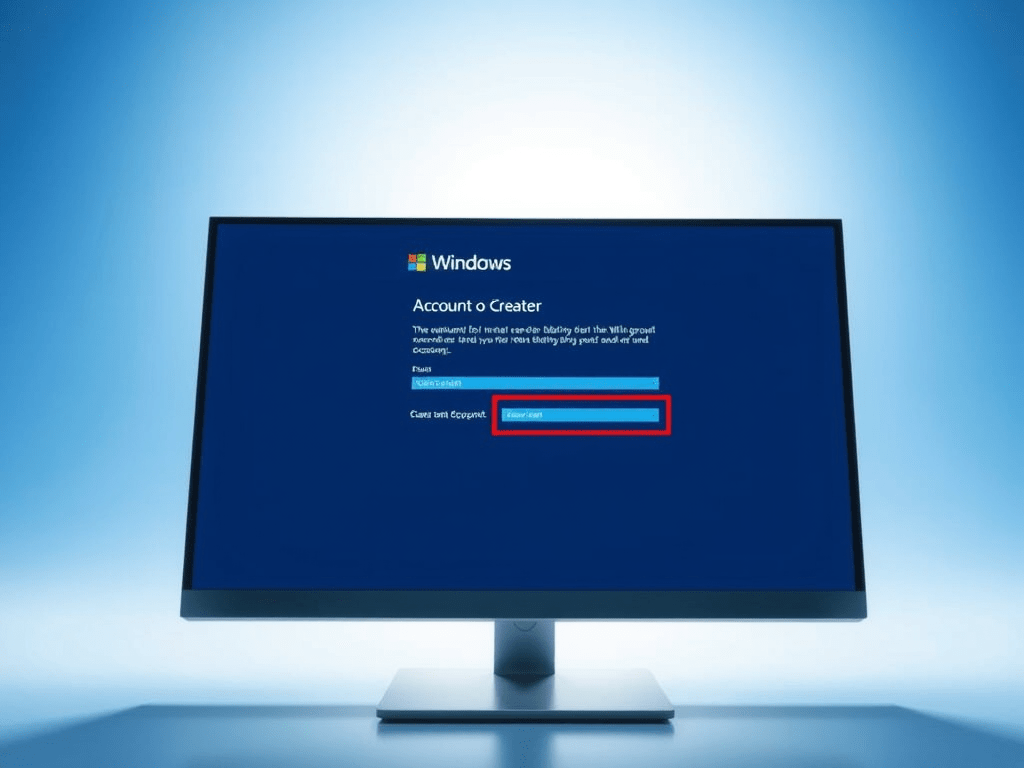


 ID 10 T